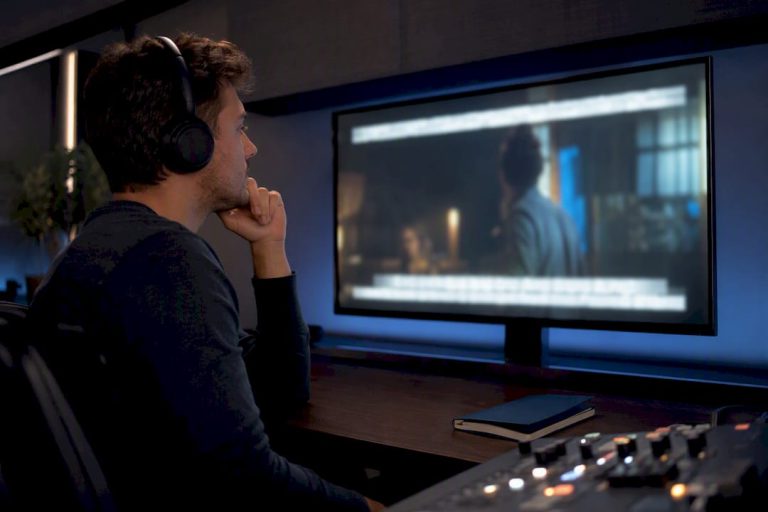
An AI highlight detector automatically finds and ranks clip-worthy moments in long recordings, returning timestamps, scores and often ready-to-export clips or captions. It reads the transcript, the audio and the picture together, then scores segments rather than isolated frames so that long footage keeps its context. You get a short list to review instead of hours to scrub.
TL;DR:
- Test each detector on the same clean interview, noisy event, and fast moving screen recording, then compare whether it finds known strong moments.
- Check transcript quality first, then confirm audio and visual cues, context aware scoring, required exports, and clear rules for footage retention and training.
- For live events, choose an online detector that scores incoming footage without waiting for future frames; batch processing suits finished recordings.
- Mr. HiSum labels 31,892 videos using viewer replay behavior, but benchmark results do not guarantee comparable performance on your channel or content type.
- Refine trims, hooks, and captions by hand, then track click through rate and average view duration across published clip variants.
Table of Contents
- How do AI highlight detectors actually work?
- What should you check before choosing a highlight detector?
- Which workflows turn detected highlights into publishable clips?
- What does the research say about long-form highlight detection?
- What should you realistically expect from an AI highlight detector?
- How TechVideoBlog helps you shortlist and test detectors
- FAQ
- Sources
How do AI highlight detectors actually work?
Most tools stack a few signal types, then fuse them into one score per moment.
- Transcript and ASR: speech-to-text powers semantic search and natural-language queries, such as “find where the guest explains pricing.”
- Audio cues: loudness spikes, applause, laughter and sudden changes in speaking energy.
- Visual cues: faces, motion, action and scene changes, often summarized by a vision-language model into text captions.
- Segment-level scoring: the system groups footage into context-aware segments and scores each one, instead of judging short clips in isolation.
- Streaming scoring: online models judge each moment as it arrives, which suits live streams.
The clip-level versus segment-level split matters most for long footage. Clip-level scoring works on short snippets at a time and can lose the thread of a long show. Segment-level methods keep surrounding context, which is why they scale. One recent example is TF-SELECTOR, a training-free approach that builds context-aware segments from visual captions, transcripts and audio volume, then asks an LLM to predict saliency per segment.
Under the hood you will meet transformer-based video-language models, training-free segment pipelines and online frameworks. You do not need to pick one by name. You need to know which family a tool belongs to, because that predicts how it behaves on your footage.
What should you check before choosing a highlight detector?
Run any tool through this checklist, in roughly this order of priority:
- Processing mode. Batch suits finished recordings such as podcasts and webinars. Streaming suits live events where you want moments flagged while the show is still running.
- Exports and integrations. Look for timeline exports to your editor, SRT or VTT captions, and vertical crop presets for Shorts and Reels. Our AI video editors category shows which editors handle this well.
- Configurability. Custom keywords, an engagement or virality score you can tune, and speaker diarization with named speakers save the most editing time.
- Accuracy signals. Check ASR quality first, since weak transcripts poison everything downstream. Then ask whether the tool fuses audio and vision, and whether scoring is segment-aware.
- Privacy and hosting. Ask whether footage is processed locally or in the cloud, how long it is retained, and whether it is used for training.
- Pricing shape. Expect per-minute processing, monthly caps or seat-based plans. Confirm what happens when you exceed the cap.
Pro Tip: Trial every tool on the same three files, one clean interview, one noisy event and one fast-moving screen recording, and note which known great moments each one finds.
Which workflows turn detected highlights into publishable clips?
Detection is only step one. These recipes cover the most common repurposing jobs.
- Short-clip workflow: ingest the long recording, run auto-detection, sort by score, pick the top candidates, trim, add captions, then export and publish. Pair it with a strong caption generator so the transcript quality carries through to the final burn-in.
- Podcast workflow: turn on diarization, search the transcript for keywords and quotable lines, then export captioned audiograms. Named speakers make it quick to pull a guest’s best answer.
- Gaming or live-event workflow: combine detector output with replay markers or most-replayed signals and a timeline export, so you assemble the montage fast. Our gaming highlights guide walks through examples.
- Automation downstream: once clips are chosen, platforms such as Palmador show how pipelines can generate finished video with captions automatically.
To test any tool, mark five to ten moments you already know are great, run the detector, and count how many land in its top results. Then track CTR and average view duration on what you publish, and adjust thresholds from there.
What does the research say about long-form highlight detection?
Several projects give you a realistic map of current capability.
SVHighlights is a benchmark built from extremely long sports videos, aligned with official highlight reels. The SVHighlights paper reports an average video duration of 2.00 hours, and shows that segment-based, training-free methods improve HIT@1, HIT@K and IoU over prior baselines.
Mr. HiSum supplies viewer behavior as supervision. Its dataset labels videos using YouTube’s “Most replayed” signal.
31,892 videos carry highlight labels aggregated from user watch behavior in Mr. HiSum.
That scale shows why large viewer signals make evaluation more robust than a handful of hand-labeled clips.
Lighthouse is the one to try yourself. The Lighthouse library bundles six moment-retrieval and highlight-detection models, three features and five datasets, with an inference API and a web demo for side-by-side comparison.

Aha targets live use. Aha predicts frame-level relevance online without looking at future frames, and reports state-of-the-art results on standard highlight detection benchmarks. That matters for streams where waiting for the full recording is not an option.
One caution: these are research results on specific benchmarks, not guarantees for your channel. Prefer tools that cite long-form benchmarks, offer segment-aware scoring or let you reproduce an evaluation on your own files.
What should you realistically expect from an AI highlight detector?

Here is my stance: a detector is a very good first-pass editor and a poor final one. It finds candidates that would otherwise take time to locate, but it cannot judge brand fit, pacing or the joke that lands only because of context. Plan on trimming and rewriting hooks by hand.
Measure it by what happens after you publish. Track CTR and average view duration, and A/B test two clip variants from the same detected moment. Start with a small sample of footage, adjust thresholds until the top five picks feel right, and wire the detector in early in your repurposing pipeline rather than bolting it on after editing.
— H
How TechVideoBlog helps you shortlist and test detectors
We test AI video tools hands-on, verify pricing and compare tools by real workflow results, so you can apply the checklist above without sifting through marketing copy. Start in our tools directory and filter by what matters for highlight work:
- ASR quality and caption exports
- NLE and timeline export
- Streaming or online capability
- Privacy options
When you are ready to compare, open Best AI Video Tools and run our How We Test AI Tools trial checklist on your own footage.
FAQ
What is an AI highlight detector?
It is software that scans long video or audio and picks out the most engaging moments. It returns timestamps, scores and often clips or captions you can export.
How accurate are AI highlight detectors on long videos?
Accuracy depends on transcript quality, the signals used and whether scoring is segment-aware. Research on extremely long sports videos shows segment-based methods beating earlier baselines, but your content type changes results, so test on your own files.
Can an AI highlight detector work on live streams?
Yes, if it uses an online approach. Aha is a research example that scores frames without looking ahead, which is what live use requires.
Do I still need to edit the clips myself?
Usually yes. Detectors are best at shortlisting moments, while trimming, hooks and captions still benefit from a human pass.
Sources
- SVHighlights: Towards Extremely Long Sport Video Highlight Detection
- 2509.16421 Aha – Predicting What Matters Next: Online Highlight Detection Without Looking Ahead
- Mr. HiSum: A Large-scale Dataset for Video Highlight Detection and Summarization