The fastest route to a usable UGC-style ad is a hook-led script paired with an AI avatar or a synthetic clip, cleaned up with captions and platform-ready edits. Testing supports this workflow for short social ads and concept testing, where speed matters more than polish. It is not yet a swap for a premium creator shoot, but for a 15 to 30 second hook test, it gets you to a usable asset the same day.
TL;DR:
- Write a 15 to 30 second hook script, create 2 to 3 variations, test them, then adapt the winner into 3 to 5 platform versions.
- HeyGen suits multilingual presenters, SendShort suits quick drafts, and UGC Ads AI suits bulk variants, with less focus on realism for each clip.
- Use small pauses, uneven framing, timed captions, and a product close up to give synthetic clips the texture of casual phone footage.
- Label realistic AI content in the video and caption on TikTok, and never use a real person’s likeness without explicit permission.
- Use AI to test hooks, but choose real creators for long testimonials or campaigns that rely on personal credibility.
Table of Contents
- Step-by-step: making a UGC-style clip with AI
- Curated shortlist: which AI UGC tools suit which job
- Making AI-generated UGC feel authentic
- Disclosure rules you need to follow for AI UGC
- How we test AI UGC tools
- When AI UGC makes sense, and when it doesn’t
- Try TechVideoBlog’s tested tool directory
- FAQ
- Sources
Step-by-step: making a UGC-style clip with AI
Treat this like a production line, not a one-shot experiment. Each step feeds the next, and skipping the script stage is the most common reason an AI UGC clip falls flat.
- Write the hook first. Draft a 15 to 30 second script built around a single hook, and write 2 to 3 variations so you have something to test against.
- Pick your source material. Use an AI avatar for talking-head delivery, generate a synthetic clip from a product photo, or upload real footage and layer AI elements on top of it.
- Generate with texture, not polish. Prompt for natural speech patterns, including small hesitations and filler words, and note where B-roll should cut in.
- Edit to spec. Crop to 9:16 for Reels and TikTok, burn in captions timed to the voice track, add any graphic tags, and export in the format your ad platform expects.
- Iterate on a schedule. Run the hook variations and calls to action against each other and log results in a short test matrix, even a simple spreadsheet works.
Pro Tip: Render your weakest-sounding script variation first. If the AI voice handles awkward phrasing convincingly, your strongest script will sound even better.
Curated shortlist: which AI UGC tools suit which job
Different tools solve different jobs inside this workflow, and matching the tool to the job matters more than picking a single best type of AI content tool option. An avatar-first tool wins on talking-head delivery, a bulk generator wins on volume, and a directory can help you understand which is which before you commit a subscription.
| Tool | Best for | Output realism | Speed | Pricing model | Export fidelity & retry fees |
|---|---|---|---|---|---|
| TechVideoBlog | Choosing the right tool for your exact use case | Verified through hands-on export checks | Fast decision making, not generation | Free to browse; affiliate-linked tool pricing | We log retry fees and export quality per tool we test |
| HeyGen | Talking-head UGC and multilingual voiceovers | High on avatar lip-sync and localized voice | Moderate, avatar rendering takes time | Subscription tiers | Standard export presets for social formats |
| SendShort | Fast hook-first social ads and quick testing | Good for short, simple hooks | Fastest of the group for first drafts | Free trial, then subscription | Basic export options tuned for social cuts |
| UGC Ads AI | Bulk generation of many ad variants | Varies by avatar chosen from the library | Fast once a script template is set | Credit or per-video pricing | Built for volume, less focus on single-clip polish |
- HeyGen fits brands that need a consistent talking-head presenter across several languages without rebooking a creator for each market.
- SendShort fits teams that want to throw a rough hook online within the hour and see if it earns a click.
- UGC Ads AI fits performance teams that need a dozen actor-and-script permutations to feed a testing budget, trading some per-clip realism for sheer volume.
- Our AI avatar tool directory and video generator category break these trade-offs down tool by tool, with export notes from our own tests.
Making AI-generated UGC feel authentic
The clips that perform best rarely look clean. Authenticity in this format comes from texture, not from avoiding mistakes, and a handful of production habits close most of the gap between an obviously synthetic clip and one that reads as a real person’s phone footage.
- Prompt the avatar or voice engine for small imperfections: a short breath before a sentence, a filler word, a half-second pause where someone is thinking.
- Shoot or render with a handheld feel, slightly uneven framing and imperfect lighting read as real more than a studio-smooth composition does.
- Hold the product in frame for a close-up moment, viewers associate that gesture with genuine use rather than a staged demo.
- Caption every clip and time the text to match mouth movements closely, use a native caption file where the tool supports one rather than a generic auto-burn.
- Test the hook and the first frame before anything else, those two elements decide whether a viewer keeps watching.
Once one version works, cut it into 3 to 5 platform-specific versions, different crops, caption styles, and lengths, rather than starting a new script from scratch.
Pro Tip: Save your winning hook script as a template and swap only the product details for the next campaign. The pacing that worked once usually works again.
Disclosure rules you need to follow for AI UGC
Realistic AI avatars can cross into territory the FTC’s endorsement and testimonial guidance treats as a testimonial, and presenting a synthetic voice as a real customer’s opinion is the specific risk to avoid. The federal endorsement guides spell out when a depiction creates the impression of a genuine endorsement, which is the standard regulators apply regardless of how the content was produced.
TikTok’s synthetic media policy requires realistic AI-generated content to carry disclosure, and recommends in-video labels alongside caption-level notes so viewers are not misled about what they are watching.
A short checklist keeps most campaigns clear of both problems:
- Label realistic AI-generated footage clearly, in the video itself and in the caption.
- Never use a real person’s likeness, celebrity or otherwise, without explicit permission.
- Add a brief on-screen sticker or caption line when the presenter is synthetic.
- When you are unsure whether disclosure is needed, add it anyway, a short text line costs you nothing and removes the ambiguity.
How we test AI UGC tools
Many testing processes use the same short script through every tool in a comparison, export the resulting clips, and check audio and video sync, caption accuracy, and overall export quality side by side. They time how long each generation takes and note any retry fees charged when an export needs a second pass.
- Output realism, judged against the same script and avatar brief across tools.
- Export fidelity, including file quality and format compatibility with common ad platforms.
- Caption accuracy and sync to spoken audio.
- Generation speed and any retry costs for a failed or flawed export.
- Cost per clip when scaling to multiple variants.
Full side-by-side results live on our tool testing hub, updated as we add new tools to the comparison.
When AI UGC makes sense, and when it doesn’t
AI UGC earns its place at the testing stage: when you need five hook variations by tomorrow morning to see which one a cold audience responds to, a real shoot can’t move that fast. It earns a smaller role once a concept proves itself and the ad is carrying brand trust rather than just a click.
For a long-form testimonial or a campaign that leans on a creator’s personal credibility, a real creator still outperforms a synthetic one. The practical move is to use AI to find the winning hook fast, then rebuild that winning concept with a real creator once the data says it’s worth the investment.

Try TechVideoBlog’s tested tool directory
We built our directory around the same question you’re asking: which tool actually gets the job done without wasting a week on trial accounts. Every listing comes from a hands-on workflow test, with verified pricing and export notes rather than recycled marketing copy.
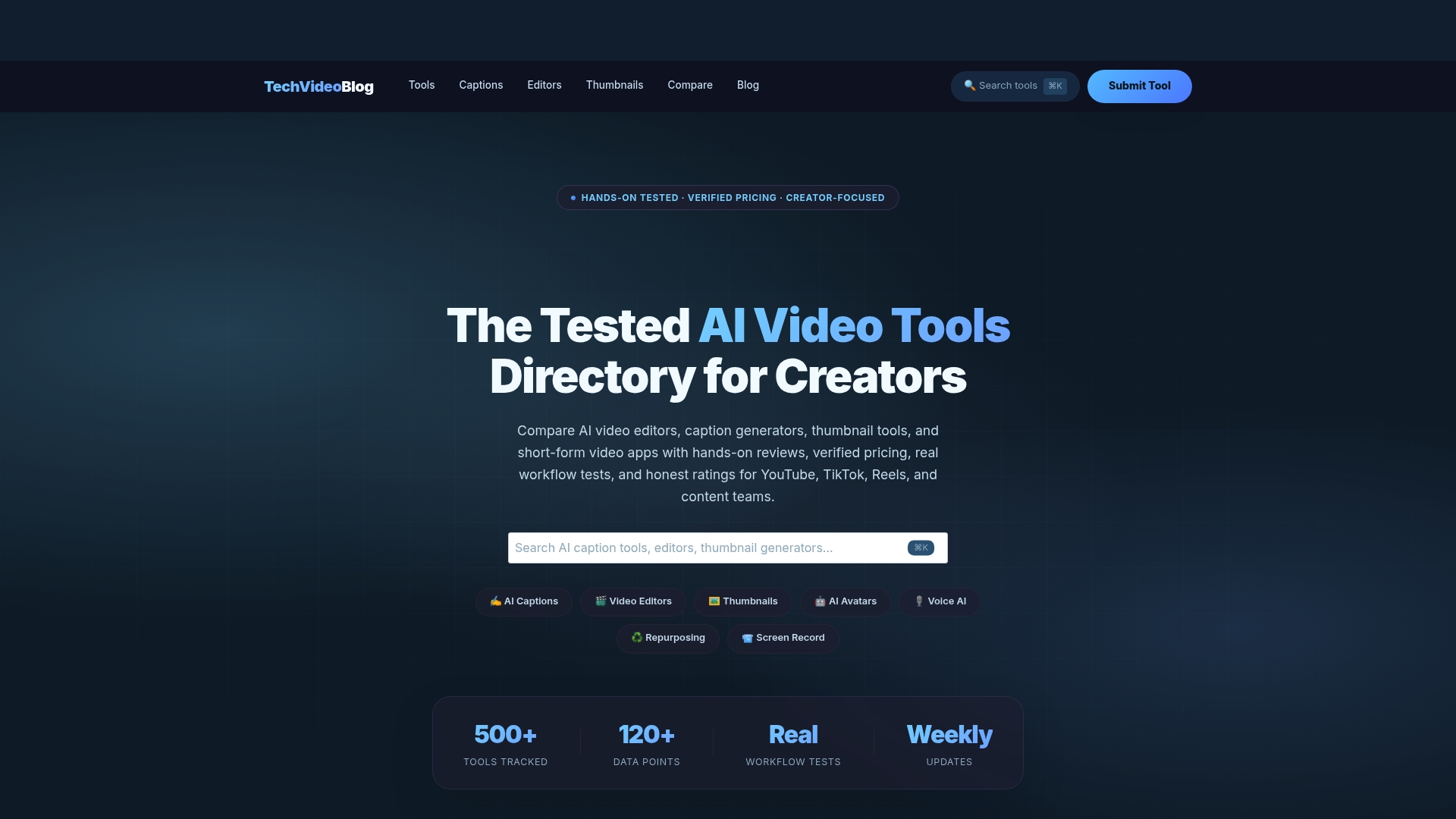
- Browse our AI video tool directory for side-by-side exports and pricing across every category we’ve tested.
- Check our avatar tool rankings if talking-head UGC is your main use case.
- Read how we test to see the exact checks behind every score before you commit a subscription.
Start with the category page closest to your use case, and compare your shortlist against our test notes before you pay for a plan.
FAQ
What is an AI UGC ad?
An AI UGC ad is a short, social-style video built to look like a real customer’s organic content but produced with AI tools such as avatars, synthetic voices, or AI-assisted editing instead of a hired creator. It typically follows the same hook-led, informal structure as genuine user-generated content.
Does AI accept videos?
Many AI video tools accept uploaded footage as a source, letting you layer AI-generated voice, captions, or avatar elements onto real clips rather than generating everything from scratch. The specific formats and file size limits vary by tool, so check each platform’s upload requirements before a shoot.
Is AI UGC allowed on TikTok?
Yes, with disclosure. TikTok’s synthetic media guidance requires realistic AI-generated content to be labeled, so AI UGC is permitted as long as it’s clearly flagged as synthetic rather than presented as an unedited real person.
Is VideoGPT free?
Pricing and features for tools marketed under names like VideoGPT vary and are not something we’ve verified through our own testing. Check the specific tool’s pricing page directly, and compare it against tools we have tested in our video generator directory before committing.
Sources
- The Consumer Reviews and Testimonials Rule: Questions and Answers | Federal Trade Commission
- PART 255—GUIDES CONCERNING USE OF ENDORSEMENTS AND TESTIMONIALS IN ADVERTISING
- Synthetic Media Framework Case Study: TikTok | Partnership on AI