
AI-assisted production, creator-led UGC, and platform monetization shifts define short form trends 2026, and completion rate matters more than view count. The immediate move: build a repeatable series format, rewrite your first three hook seconds, and let AI handle scale tasks like captions and repurposing while a human checks every fact and brand voice pass. Workflow tests back this up, along with data from Revid on completion patterns across hundreds of thousands of clips.
TL;DR:
- Creator-led UGC now outperforms polished ads, and brands should build a submission pipeline for authentic content from customers or employees.
- Platforms reward different behaviors; TikTok favors rewatch rate, YouTube Shorts benefits search visibility, and Instagram focuses on originality signals.
- AI tools handle many tasks, but creators must run quality checks and disclose AI assistance to maintain trust and avoid credibility loss.
- Longer videos from 30 to 90 seconds perform well if the content delivers value, with specific formats driving completion, shares, or conversions.
- Focusing on one high-performing, completion-driven series and testing translations before expansion yields better results than chasing every trend.
Table of Contents
- Short Form Trends 2026 at a Glance
- AI Is Doing More of the Work, But It Can’t Do All of It
- Creator and UGC Content Is the New Creative Baseline
- Which Platform Should You Prioritize in 2026?
- Formats, Hooks, and the Length Question
- Captions and Searchable Text Decide Who Finds You
- Turn One Video Into Ten: The Repurposing Workflow
- Which Metrics Actually Predict Revenue in 2026
- Your 8-Week Short-Form Test Plan
- What TechVideoBlog’s Testing Actually Shows
- Stop Chasing Every Trend. Build One Completion-Focused Series Instead
- Where to Find Tested Tools for Every Step of This Playbook
- Sources
- FAQ
Short Form Trends 2026 at a Glance
Short-form video isn’t a side channel anymore. It’s the main event, and the trends below decide who wins attention and who gets scrolled past.
- AI-assisted production at scale. So what: a growing share of uploads now involve AI somewhere in the pipeline, from voiceover to b-roll. Do this: use AI for repetitive tasks, but keep a human doing the final brand voice pass.
- Creator and UGC content as the default. So what: raw, creator-shot footage now outperforms polished brand ads in trust and watch time. Do this: build a UGC submission pipeline instead of relying only on agency shoots.
- Platform-specific length and monetization shifts. So what: TikTok, YouTube Shorts, and Instagram Reels each reward different clip lengths and payout structures now. Do this: match your primary platform to your actual business goal, not habit.
- Format-to-metric mapping. So what: certain formats reliably drive completion, others drive shares. Do this: pick the format based on the metric you actually need this month.
- Animated captions and searchable text. So what: caption styling now affects both retention and discoverability. Do this: audit every title and on-screen text line for search terms.
- Repurposing and localization. So what: one long video can become a dozen platform-native clips, and translated versions often find new audiences cheaply. Do this: run a small translated test batch before scaling.
- Stacked monetization across platforms. So what: creators rarely rely on one revenue source anymore. Do this: track RPM and Creator Rewards separately per platform.
AI Is Doing More of the Work, But It Can’t Do All of It
AI now touches most of the short-form pipeline somewhere between script and export, with efficient workflows demonstrated by tools like AmmarAI’s text-to-video generation. Voiceover generation, image-to-video conversion, automated captioning, and one-click repurposing have moved from novelty to default workflow for a large share of active creators. Tools built for image-to-video production and faceless channel creation have made it possible to publish daily without ever appearing on camera, and Revid.ai’s analysis finds faceless formats and AI avatars have become a mainstream business model rather than a fringe experiment.
That scale creates a transparency problem. Platforms increasingly expect creators to disclose when content is AI-generated or AI-assisted, and audiences tend to punish undisclosed synthetic content harder than they punish an honest label. Skipping disclosure isn’t a shortcut. It’s a trust risk that compounds the moment a viewer notices on their own.
The fix is a short quality control pass, not a rejection of AI tools. Before publishing anything AI-touched, run it through:
- A spot-check on any AI-generated voice or visual for factual accuracy.
- A brand voice pass to confirm the script still sounds like your channel, not a generic AI default.
- A fact-check on any claim, statistic, or quote the AI inserted or paraphrased.
- A disclosure check against the platform’s current labeling requirement.
Cost-wise, AI tasks like captioning and script-to-voice conversion often run a fraction of what a manual editor charges per clip, but the savings evaporate fast if unchecked output damages credibility. The best AI tools for YouTube Shorts tend to separate generation speed from quality control, and that split is worth paying attention to when picking a stack.
Pro Tip: Run your AI-generated script past a text-to-speech tool and listen with your eyes closed. If it sounds robotic or off-brand at second three, rewrite the opening line before you touch the visuals.
Creator and UGC Content Is the New Creative Baseline
Polished, agency-produced ads no longer win the attention fight against raw, creator-shot footage. Viewers scroll fast, and content that looks like it came from a person rather than a studio earns longer watch time and more trust signals, a pattern consistent with the completion and retention data Revid.ai tracked across its 2026 dataset. That doesn’t mean production quality stopped mattering. It means the appearance of unpolished authenticity now outperforms the appearance of a commercial.
Brands have three realistic models for tapping into this:
- Paid creator partnerships. Hire creators who already have an audience and a native style, and let them shoot in their own voice rather than reading brand copy verbatim.
- UGC submission programs. Invite your existing customers or audience to submit clips, then license and edit the strongest ones into a rotating content calendar.
- Employee-created content. Let team members who are comfortable on camera produce quick, low-cost clips that read as insider perspective rather than marketing.
Whichever model you pick, run every submission through the same checklist before it goes live: a clear usage rights agreement, a brand safety review for anything sensitive, a quick QC pass on audio and lighting, and a tagging system so you can measure which creator or submission source actually drives completion and follower conversion. Skipping the rights step is the single most common mistake brands make when scaling UGC. It’s cheap to fix upfront and expensive to fix after a creator disputes usage.
Which Platform Should You Prioritize in 2026?
TikTok, YouTube Shorts, and Instagram Reels rewrote parts of their algorithms and monetization rules heading into 2026, and each platform now rewards a different behavior.
TikTok’s discovery engine leans harder on rewatch rate than raw view count, so a clip that gets watched twice by the same viewer often outperforms one that gets watched once by two different viewers. Monetization sweet spots on TikTok tend to cluster around clips that clear a minimum length threshold while still holding attention to the end, according to Kineclip’s 2026 platform analysis.
YouTube Shorts extended its native length ceiling and tied Shorts more tightly into YouTube’s search index, meaning a well-titled Short can now surface in search results the way a full-length video does. That search integration is a real advantage for evergreen, how-to style content, and it pairs well with the YouTube Shorts-focused guides creators use to plan around it.
Instagram Reels shifted weight toward originality signals, penalizing reposted or watermarked content and favoring first-generation clips, while distribution still leans heavily on existing follower relationships rather than pure cold discovery.
Pick your primary platform by outcome, not preference:
- Cold discovery and reach: TikTok, thanks to its rewatch-weighted algorithm.
- Evergreen search traffic: YouTube Shorts, thanks to search index integration.
- Deepening relationships with an existing audience: Instagram Reels, thanks to follower-weighted distribution.
Formats, Hooks, and the Length Question
Longer isn’t automatically worse anymore. Clips running 30 to 90 seconds and beyond are increasingly common where the material earns that runtime, and Kineclip’s analysis notes platforms now reward watch time when a clip actually delivers a payoff instead of padding. The old advice to keep everything under 15 seconds is outdated for most niches.
| Clip length | Typical completion pattern | Best-fit content type |
|---|---|---|
| — | Highest completion rate, lowest depth | Quick tips, punchlines, reaction clips |
| — | Strong completion if hook lands in first 3 seconds | Tutorials, product demos, list-style content |
| 30 to 90 seconds and beyond | Lower completion overall, but high rewatch among engaged viewers | Storytelling, case studies, layered explainers |
Match format to the metric you actually need:
- Talking-head direct address drives trust and follower conversion.
- Text-on-screen listicle format drives shares and saves.
- Behind-the-scenes or process clips drive completion and rewatch.
- Before-and-after demonstrations drive comments and profile visits.
Five hook templates worth testing on your next batch:
- “The mistake I made before I figured this out…” (curiosity gap)
- “Here’s what nobody tells you about [topic]” (contrarian angle)
- “Watch what happens when I [specific action]” (visual promise)
- “Three things I wish I knew before [situation]” (list promise)
- “This changed how I think about [topic]” (personal stakes)
Captions and Searchable Text Decide Who Finds You
Animated, word-synced captions are now the default rather than a nice-to-have. Revid.ai’s dataset found caption adoption above 85% of analyzed clips, with roughly 97% of those captioned videos using an animated style rather than static text. That adoption rate correlates with higher retention, and it also makes content accessible to viewers watching muted, which is most viewers on mobile.
Search is quietly eating a growing share of short-form discovery. AutoClip’s 2026 analysis points out that titles and on-screen text now function almost like SEO copy, feeding into how platforms surface long-tail results days or weeks after publish.
Run every clip through this checklist before it goes live:
- Captions synced to speech, not just dropped in as a static block.
- Font size large enough to read on a phone screen without zooming.
- Placement that never covers a face, product, or key visual element.
- A title and first on-screen text line that includes an actual search term a viewer would type.
Pro Tip: Write your title as if someone typed it into a search bar, not as a clever pun. “How to fix a slow WiFi router” beats “My WiFi drama” almost every time on search-driven surfaces.
For translation, a quick test run of dubbed or subtitled versions on a handful of clips can reveal whether a new language audience exists before you commit to translating your entire library.
Turn One Video Into Ten: The Repurposing Workflow
A single long-form video or podcast episode can realistically produce eight to twelve platform-native short clips if you break the process into clear stages instead of trying to do it all at once.
- Extract the raw moments. Pull three to five standout segments from the source video, each with a clear beginning and payoff, using a long video to Shorts tool.
- Edit for platform-native pacing. Reframe the aspect ratio, add animated captions, and trim dead air so each clip feels built for its destination platform rather than dropped in from elsewhere.
- Run the 5-clip translation test. Pick your five strongest clips and produce translated or dubbed versions for one additional language market, then compare completion rate against the original.
- Measure before scaling. If the translated batch holds completion within a reasonable range of the original, expand the translation workflow across your library. If it drops sharply, dub select formats instead of everything.
- Stagger the release schedule. Spread the resulting clips across a two-to-three week window and across platforms instead of dumping them all on the same day, which keeps your channel active without burning the whole batch at once.
TechVideoBlog’s AI video repurposing guide walks through the tool-level steps for stages one and two, and the video repurposing category hub covers packaging tactics for creators running this on a weekly cadence.
Which Metrics Actually Predict Revenue in 2026
View count tells you almost nothing about whether a clip is working. AutoClip’s benchmarking makes the case that completion and rewatch rate should sit above impressions in any short-form scorecard, because both correlate directly with algorithmic distribution.
Prioritize these four:
- Completion rate. The percentage of viewers who watch to the end. It’s the strongest signal most platforms use to decide who else sees your clip next.
- Rewatch rate. How often the same viewer loops the clip. High rewatch on a short clip often outperforms a longer clip with a single watch.
- Saves and shares. These indicate a viewer found the content valuable enough to revisit or pass along, which tends to predict longer-term channel growth better than likes.
- Follower conversion rate. The share of viewers who follow after watching. This is the metric that actually links short-form activity to audience ownership rather than borrowed platform reach.
Monetization stacking is now standard practice rather than a hedge. RPM ranges and Creator Rewards structures vary by platform and niche, and Kineclip’s reporting notes creators increasingly combine platform payouts, brand deals, and affiliate revenue rather than depending on one source.
To connect clips to actual business outcomes, run a simple experiment: tag a batch of clips with a consistent call-to-action link, track click-through separately from completion rate, and compare which format or hook style produces the highest downstream conversion, not just the highest view count.
Your 8-Week Short-Form Test Plan
You don’t need a large team to run this. One editor, one strategist, and someone doing quality assurance checks can execute the whole cycle.
- Weeks 1 to 2: Audit your last 20 titles and captions against the searchability checklist above, then produce three pilot clips using three different formats (talking-head, listicle, behind-the-scenes) on the same topic.
- Weeks 3 to 4: Identify which pilot format hit the strongest completion rate, scale that format into a five-clip series, and run your 5-clip translation test on the strongest performer.
- Weeks 5 to 6: Refine packaging on titles, thumbnails, and caption styling based on what the pilot data showed, then stagger the release across platforms per the repurposing framework.
- Weeks 7 to 8: Compare completion rate, rewatch rate, and follower conversion against your baseline from week one, then set a stop or go decision for the next quarter’s budget.
Set your thresholds before you start, not after you see the numbers. If completion rate on the winning format doesn’t beat your channel average by a clear margin, that’s a stop signal, not a reason to keep pushing volume. TechVideoBlog’s step-by-step Shorts workflow guide covers the tool-level execution for the production weeks.
Pro Tip: Assign one person to own the stop/go call before week one starts. Decisions made in the moment, after watching a dashboard for an hour, tend to favor whatever format the room already liked.
What TechVideoBlog’s Testing Actually Shows
TechVideoBlog runs hands-on workflow tests rather than repeating vendor marketing copy, checking real output quality, pricing accuracy, and how a tool performs inside an actual production pipeline. That approach shapes the best AI tools for YouTube Shorts roundup and the broader tools directory.
Two workflows worth copying directly:
Captioning in under 90 seconds: Drop a raw clip into an AI captioning tool, apply an animated word-synced style, adjust font size for mobile legibility, and export. The bottleneck is almost never the tool. It’s remembering to proofread the auto-generated text before publishing.
Rapid repurposing flow: Take one 10-minute long-form video, run it through a clipping tool to extract three to five moments, reframe each for vertical format, and caption all three in one batch session rather than one at a time.

The about page covers how TechVideoBlog structures its review and testing methodology in more detail.
Stop Chasing Every Trend. Build One Completion-Focused Series Instead
The conventional advice for 2026 says try everything: every platform, every format, every AI tool that launches this month. That advice is backwards. Spreading a small team across five formats and three platforms guarantees mediocre data on all of them and strong data on none. The better move is picking one repeatable series format, running it long enough to get a real completion-rate baseline, and only then deciding whether to expand.
The contrarian call worth making early: test translated repurposing before you chase the next platform feature. A small translation batch often uncovers incremental audience at a fraction of the cost of chasing an algorithm change that might reverse next quarter. Series consistency and language reach compound. Trend chasing usually doesn’t.
— H
Where to Find Tested Tools for Every Step of This Playbook
Running the playbook above gets a lot easier when you’re not guessing which AI tool actually does what it claims. The site exists because tool vendors write their own marketing copy, and someone needs to test the captioning speed, pricing tiers, and output quality against a real production timeline instead of a demo reel.
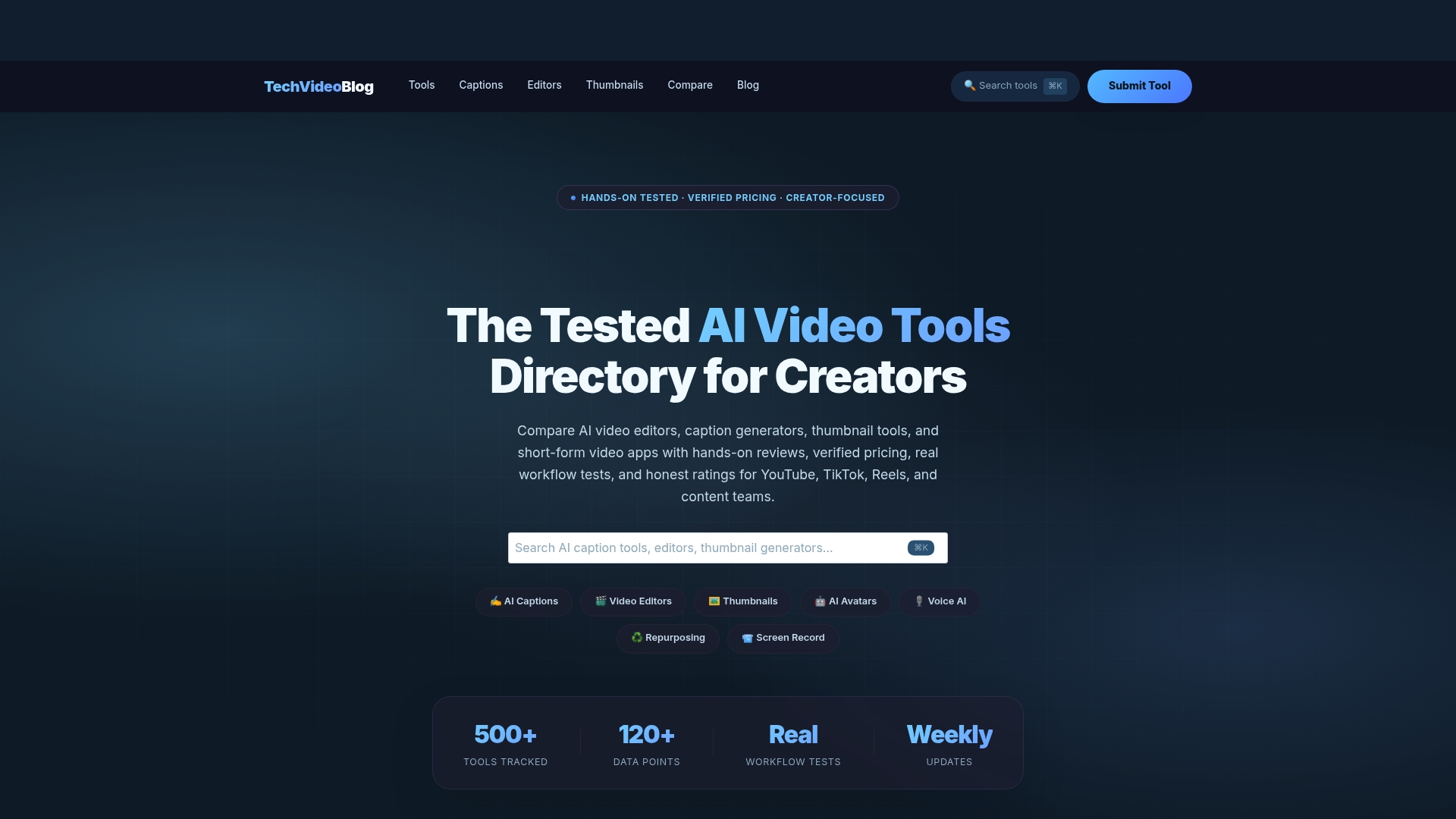
That’s the gap. A gap is filled by hands-on reviews, verified pricing, and workflow tests across categories like captioning, repurposing, voice cloning, and faceless avatar generation, so you’re picking a tool based on how it performs on an actual clip rather than how good its landing page looks. If you’re building the 8-week test plan from this article, start by browsing the tool categories on TechVideoBlog to match a tool to each stage, from initial captioning through translation testing.
Sources
- Revid
- Short-Form Video Trends 2026: TikTok, YouTube & Instagram — Kineclip
- Short-Form Video Trends Worth Acting On in 2026 — AutoClip
FAQ
What Are the Biggest Short-Form Trends of 2026?
AI-assisted production at scale, creator-led UGC as the creative default, platform-specific length and monetization shifts, and completion-focused measurement are the four trends reshaping short-form video this year.
Why Do Gen Z Viewers Prefer Short-Form Content?
Short-form clips deliver a payoff in seconds rather than minutes, which fits mobile viewing habits and the rewatch-driven discovery models platforms like TikTok now favor.
What Are the Latest Social Media Trends for 2026?
Beyond short-form, the biggest shifts are AI disclosure requirements, search-driven discovery for video content, and monetization stacking across multiple platforms instead of relying on a single revenue source.
What Are Some Good Ideas for Short-Form Content?
Behind-the-scenes process clips, before-and-after demonstrations, talking-head direct address videos, and text-on-screen listicles each drive different metrics, so pick the format based on whether you want completion, shares, or follower conversion.
How Long Should a Short-Form Video Be in 2026?
Clips under 15 seconds still win on raw completion rate, but 30 to 90 second clips now perform well when the content justifies the extra runtime, particularly for tutorials and storytelling formats.